OTT Advertising: Guide to Over-The-Top Ads (2026)
Daniel Stock | 13 Min Read
Quick Takeaways
What marketers need to know about OTT advertising.
-
OTT is now central to media plans, not an experimental channel.
-
Success requires premium inventory, precise targeting, strong creative, and transparent measurement.
-
OTT’s advantage is measurable performance through real-time optimization and attribution.
-
Ad-supported streaming growth expands access to large, highly engaged audiences.
-
Brands should prioritize first party data, contextual relevance, conversions, and ROAS.
OTT advertising is no longer an experimental line item. It’s a core part of the media mix. In 2026, U.S. digital video ad spend, which includes Connected TV (CTV), online video, and social video, is projected to surpass $80 billion, growing 11% year over year and nearly 20% faster than the broader ad market. Video is still king, and the numbers prove it.
But bigger budgets do not automatically generate better results. Successful OTT campaigns that tie ad exposure to business outcomes don’t happen by accident. They happen by design. This guide breaks down how OTT advertising works in 2026, and what marketers need to turn streaming attention into measurable performance.
What is OTT Advertising?
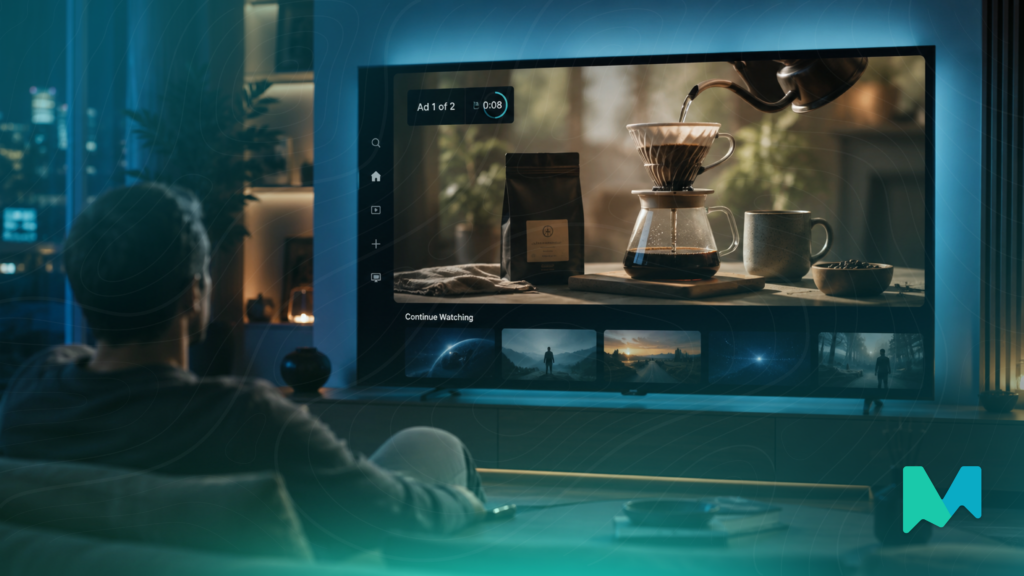
OTT (over-the-top) advertising is the delivery of video ads over the internet on streaming services and connected devices, bypassing traditional cable and satellite TV.
What sets OTT apart is precision and accountability. OTT goes beyond the broad strokes of linear TV advertising with advanced digital-marketing-style controls. In other words, it’s tailor-made for performance marketers.
However, other terms are often used alongside OTT. Specifically, Connected TV (CTV) and Video on Demand (VOD).
OTT vs Connected TV (CTV)
Think of OTT as the delivery system. It’s how streaming content travels across the internet. Connected TV is the destination: the internet-connected screens, usually smart TVs or televisions paired with streaming players, where your ads actually play.
Marketers often use “OTT” and “CTV” interchangeably. In planning and measurement, each term points to a different part of the streaming ecosystem.
OTT vs Video on Demand (VOD)
Video on demand (VOD) refers to content that viewers can choose on their own schedule, whether subscription-based, ad-supported, or a mix of both. OTT describes internet-delivered content. Because most OTT ad impressions appear in on-demand environments, the two categories overlap considerably.
Benefits of OTT Advertising
Smart marketers are putting the advantages of OTT to work for their business, and it’s easy to see why.
-
Target With Greater Precision
Use first-party and third-party audience data to focus delivery on viewers who match the campaign’s customer profile.
-
Measure the Full Response
Monitor impressions, completed views, site visits, and conversions to understand how exposure connects to performance.
-
Designed for Completion
Build concise creative that makes the most of shorter streaming ad breaks and placements viewers often cannot skip.
-
Follow Viewers to Streaming
Extend television reach to consumers who have moved away from cable and satellite and now watch streaming-first content.
-
Make the Next Step Obvious
Use supported QR codes, companion banners, or clickable experiences to give interested viewers a clear path forward.
How Does OTT Advertising Work?
OTT advertising trades old-school TV advertising for smarter, more strategic moves. But, how does it work? What are the steps involved? Here’s a quick rundown:
1. Define Goals & KPIs
Decide what OTT should accomplish in your media mix, and set clear, measurable KPIs that tie directly back to your business goals.
2. Identify Your Audience
Define your ideal viewer using first-party data, lookalikes, and third-party segments to target the households most likely to visit and convert.
3. Develop and Test OTT Creative
Produce OTT-ready spots that align with your audience, objectives, and brand. Make sure your hook, message, and CTA are clear from the first few seconds.
4. Plan Inventory, Devices, and Ad Experiences
Choose the right mix of platforms, devices, formats, and frequency controls (plus brand safety and contextual guardrails), so your OTT campaigns show up where your best customers actually watch.
5. Launch and Optimize
Monitor key metrics in real time. Use that insight to adjust, and A/B test your creative, targeting, or spend while your campaign’s still running, not after it’s over.
Video on Demand Models
Not all streaming platforms operate the same way. Understanding their VOD models helps you plan where and how to buy OTT inventory.
Here are the four main types:
SVOD
Subscription Video on Demand (SVOD) platforms like Netflix and Disney+ run on paid subscriptions. Viewers get unlimited access to content by paying a monthly fee.
While SVOD was once entirely ad-free, many now offer lower-priced, ad-supported tiers. In fact, ad-supported plans now represent 48% of subscriptions across major streamers, opening the door for advertisers to reach premium audiences in a highly engaged environment.
AVOD
Advertising Video on Demand (AVOD) services such as Pluto TV and Tubi let viewers stream for free in exchange for watching ads. These platforms offer wide reach and cost-efficient access to engaged audiences who have opted in to a free, ad-supported streaming experience.
TVOD
Transactional Video on Demand (TVOD) platforms like Apple TV and Google Play follow a pay-per-view model, where users rent or buy specific shows and movies. While traditional ad space is limited, product placements and branded integrations within premium content can offer strategic exposure.
PVOD
Premium Video on Demand (PVOD) provides early access to major releases for a premium fee. Similar to TVOD, direct advertising space is rare, but sponsorships or brand partnerships tied to big content drops can be impactful for brands with the right budget and strategy.
Ad-Supported Streaming in 2026
Ad-supported SVOD and AVOD have moved to the center of the streaming economy.
-
110M U.S. ad-supported premium SVOD subscriptions
Reached this level by the end of Q1 2026.
-
131.4M U.S. FAST users
Projected 2026 audience, equal to 38.7% of the U.S. population.
-
66.7% Share of ad-supported TV time
Streaming’s portion of ad-supported TV viewing among adults ages 18–49.
-
81.1% Viewing on major platform ad tiers
Share of ad-supported streaming time among adults ages 18–49 occurring on major services.
Best OTT Advertising Platforms
To reach today’s streaming audiences, you need to meet them where they watch. Here are some of the top OTT platforms making that possible:
Netflix
Netflix’s ad-supported tier gives advertisers access to one of streaming’s largest audiences, with premium programming and growing ad opportunities across connected devices.
Disney+
One login, three powerhouse services: Disney+, Hulu, and ESPN+. This bundle gives marketers unmatched family, entertainment, and sports inventory in a single buy.
Peacock
NBCUniversal’s streaming platform delivers a blend of free and premium content, including a robust lineup of series, movies, and live sports. It’s a smart option for brands aiming to associate with recognizable content and consistent viewership.
Roku
More than just a device, Roku is a full-scale OTT platform with extensive first-party data and a broad audience reach. Advertisers benefit from advanced targeting and access to a wide range of streaming channels, all in one place.
MNTN
MNTN Performance TV lets marketers reach premium CTV inventory across top streaming platforms through a single self-serve interface. With real-time reporting, automated optimization, and precise targeting built in, it turns streaming advertising into a performance channel that delivers on results.
Types of OTT Ads
OTT campaigns can use several formats, each built for a different viewer moment.
-
Video In-Video Ads
Pre-roll, mid-roll, and post-roll spots placed directly within streaming content. Placements may be skippable or non-skippable.
Best forFull-screen storytelling, broad reach, and campaigns built around completed views.
-
Display Banner Ads
Static or animated units displayed above or below the video player without interrupting playback.
Best forBuilding frequency and maintaining visibility across AVOD viewing sessions.
-
Overlay Overlay Ads
Semi-transparent, clickable graphics that appear over streaming video while the content continues to play.
Best forReinforcing a call-to-action and encouraging immediate interaction.
-
Support Companion Ads
Supporting visuals such as side panels or lower-thirds that run alongside the main video.
Best forExtending brand exposure during longer sessions across streaming devices.
-
Commerce Interactive and Shoppable Ads
Engagement-focused formats featuring QR codes, polls, product carousels, or add-to-cart experiences.
Best forMoving viewers from product discovery toward interaction or purchase.
-
Pause Pause Ads
Static or lightly animated creative that appears when a viewer pauses the content.
Best forReaching viewers during a high-attention moment without interrupting the program.
-
Home Home Screen and Menu Placements
Sponsored tiles, rails, branded rows, or hero units shown before a viewer selects content.
Best forDriving tune-in and building upper-funnel awareness before playback begins.
OTT Targeting Options
OTT targeting helps advertisers focus delivery on the viewers most likely to respond. Marketers can build audiences using demographics, interests, individual behaviors, household data, geographic signals, and Media Markets.
First-party data and CRM lists help brands reconnect with known prospects and customers, while retargeting keeps the message visible after an earlier interaction. Household and device targeting can also coordinate exposure across screens to manage frequency and create a more consistent experience.
In other words, all of the most effective audience targeting methods you would use on your other buy-side channels are also available in the OTT space.
Types of OTT Devices
OTT advertising reaches viewers across smart TVs, streaming devices, gaming consoles, mobile devices, and computers. Smart TVs and devices such as Roku, Fire TV, Apple TV, and Google TV Streamer bring campaigns to the largest screen in the home.
Gaming consoles can help brands reach younger, digital-first audiences, while phones and tablets extend campaigns beyond the living room. Laptops and desktops add browser-based viewing opportunities that can expand reach and help manage frequency.
Wherever your audience streams content, OTT can reach them. But if you want to know what platforms advertisers are flocking to, take a look at the chart below.
OTT Metrics and Measurement
OTT reporting gives marketers visibility into campaign performance while ads are still running. Start with impressions, audience reach, frequency, and cost per completed view (CPCV) to understand delivery, exposure, and viewing efficiency.
Return on ad spend (ROAS) links attributed revenue to media investment, while cost per acquisition (CPA) reflects the average cost of driving a specific action. Together, these metrics help marketers identify what is working to make better budget decisions.
Compare that to the old days of linear, where your reporting arrived after your campaign had already run, and it’s clear that OTT ads are a giant leap toward total transparency.
OTT Marketing Best Practices
In a streaming-first world, simply showing up isn’t enough. You need the right OTT advertising strategies. Here’s how to make your OTT campaigns work harder and smarter:
- Lead with Audience-First Targeting: Tap into first-party data, retargeting pools, and lookalike modeling to focus your spend on viewers who are most likely to take action.
- Add Contextual Relevance: Pair the message with the moment of viewing. A fitness brand might appear beside exercise content, while a travel promotion could run with an adventure program.
- Use Automated Optimization: Let machine learning work its magic. AI handles continuous changes to bids, creative delivery, and targeting so the campaign can improve while it is live.
- Apply Sequential Messaging: Replace the one-off ad with a planned series of messages that advance the viewer through the campaign journey.
- Track What Matters: Judge the campaign by outcomes tied to the objective. Site visits, conversions, and ROAS reveal more than surface-level delivery numbers.
What Impacts OTT Advertising Cost? |
||
|---|---|---|
| Cost Factor | How It Affects Cost | Why It Matters |
Audience Targeting |
More precise targeting typically raises CPMs because the audience is narrower and more valuable. | Higher CPMs can still be worth it when they reduce wasted impressions and improve overall efficiency. |
Ad Placement and Inventory Quality |
Premium platforms and high-quality placements usually come at a higher price. | Better inventory can drive stronger engagement and brand perception, but it also tends to attract more competition. |
Campaign Duration and Frequency |
Running longer campaigns or increasing ad frequency raises total spend. | More exposure can improve recall, but the best results come from balancing reach, repetition, and budget. |
Creative Production |
Higher-performing creative often requires a larger upfront production investment. | Strong creative can improve campaign performance, making the added production cost easier to justify. |
Programmatic Bidding |
Pricing can shift in real time based on demand, competition, and seasonality. | Programmatic buying helps advertisers adapt to market changes and stay efficient as costs fluctuate. |
MNTN Performance TV: The Ultimate OTT Platform
OTT advertising can help brands show up where viewers are already streaming, but performance depends on more than placement alone. MNTN helps marketers make OTT strategies more accountable with premium CTV inventory, sharper audience targeting, automated optimization, and real-time measurement.
Here’s how MNTN Performance TV helps marketers make OTT more performance-driven.
- Premium CTV Inventory — MNTN gives advertisers access to Living Room Quality inventory through 150+ direct deals with premium streaming networks, helping brands reach viewers in high-quality, non-skippable TV environments.
- MNTN Matched — AI-powered audience targeting helps marketers build high-intent CTV audiences using keywords, shopping behavior, life events, and interest signals, making OTT campaigns more precise from the start.
- Automated Optimization — MNTN optimizes campaigns throughout the flight based on budget, goals, and audience performance, helping advertisers improve efficiency while media is still live.
- Verified Visits™ — MNTN helps marketers measure site visits and resulting conversions tied to CTV ad exposure, giving teams clearer insight into how streaming campaigns contribute to performance.
- Reporting Suite — Real-time reporting gives advertisers access to campaign data through MNTN’s dashboard, Google Analytics, or third-party platforms, making OTT results easier to evaluate alongside other channels.
Turn OTT reach into measurable TV advertising performance—sign up today with MNTN’s self-serve software.
OTT Marketing Platforms: Final Thoughts
OTT advertising gives marketers a way to bring TV’s impact into a more targeted, measurable, and flexible environment. As streaming continues to reshape how audiences watch, the brands that win will be those that pair premium inventory with smart targeting, strong creative, and real-time optimization.
In 2026, OTT isn’t just another video channel. It’s a performance opportunity built for the way people watch now.
Want a Closer Look?
Discover how Performance TV delivers revenue, conversions and more through the power of Connected TV. Request a demo today to speak to an expert.