What Are Interactive Ads & How Do They Work?
Daniel Stock | 8 Min Read
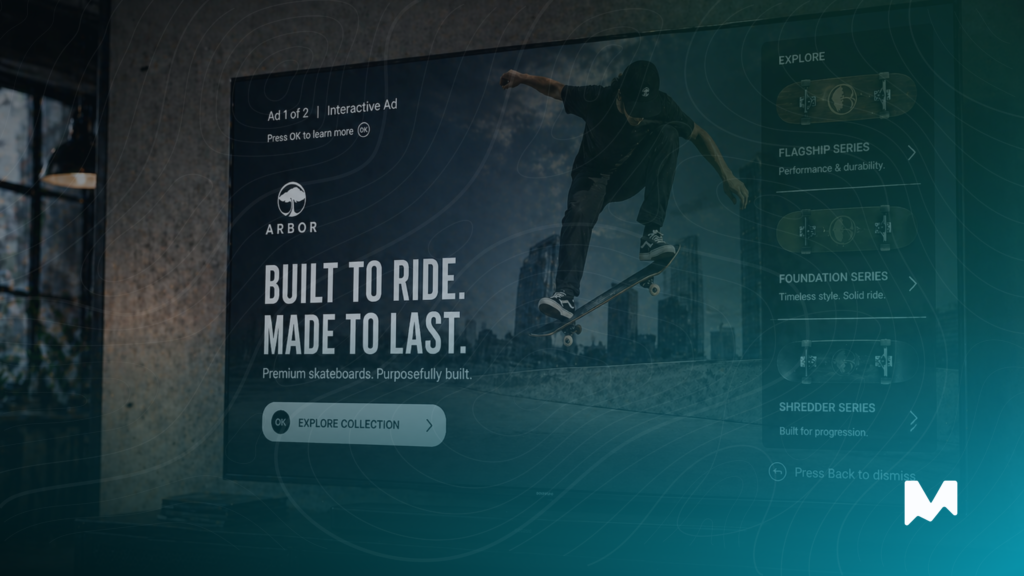
While attention is the scarcest resource in digital marketing, interactive ads are emerging as a powerful way for performance-focused brands to cut through the noise. Rather than relying on passive impressions, these formats invite viewers to engage directly, whether through a quick tap, scan, or swipe, turning what was once a one-way broadcast into a two-way conversation.
For marketers running campaigns across Connected TV, social, and beyond, this shift isn’t just a nice-to-have; it’s becoming essential for driving measurable results.
In this guide, we’ll cover everything you need to know about interactive ads, from their pros and cons to best practices for making them land with impact.
What Are Interactive Ads?
Interactive ads are digital advertisements that go beyond passive viewing by encouraging active user participation, such as clicking hotspots, scanning QR codes, exploring product carousels, or engaging with gamified elements. Unlike traditional display or video ads, they create real-time dialogue between brand and audience, delivering higher engagement and more precise performance data.
How Do Interactive Ads Work?
At their core, interactive ads leverage modern programmatic advertising platforms to target and respond instantly to user input. On platforms like Connected TV or mobile, a viewer might see a shoppable overlay or QR code during a 15- or 30-second spot; scanning or clicking routes them seamlessly to a product page, form, or second-screen experience without leaving the viewing context.
The backend is equally sophisticated. Platforms use first- and third-party data to personalize elements on the fly, while attribution models map engagements to downstream outcomes like app downloads or offline sales. The result? Marketers gain deterministic insights that static ads simply can’t provide, enabling rapid optimization loops that boost efficiency across campaigns.
Advantages of Interactive Ads
Marketers chasing performance in 2026 are turning to interactive ads because they deliver tangible lifts that passive formats struggle to match.
- Higher engagement rates: Research shows interactive formats can generate up to 2-3x more engagement than static ads, with users spending significantly more time with the content and recalling brands at higher rates.
- Improved conversion and ROAS: By shortening the path to action, whether it’s adding to cart or submitting contact info, interactive ads drive stronger direct-response results, often translating to higher ROAS without increasing media spend.
- Richer first-party data collection: Every tap or scan provides clean, consented behavioral signals that feed attribution models and audience segmentation, giving teams the kind of precise insights performance marketers crave.
- Enhanced brand recall and affinity: The act of participation creates emotional investment. Studies indicate interactive experiences boost recall and positive sentiment far beyond traditional viewing.
- Competitive differentiation in crowded channels: In a world of ad fatigue across TV and social, interactive elements help premium inventory stand out, helping brands capture attention where competitors are still broadcasting one-way messages.
Disadvantages of Interactive Ads
While the upside is compelling, interactive ads aren’t without hurdles.
- Higher production costs and complexity: Building clickable, responsive experiences often requires more advanced creative resources and testing cycles than standard video or display ads.
- Technical and compatibility challenges: Not every device or platform supports full interactivity equally (think varying CTV remote capabilities or mobile screen sizes), which can fragment reach and complicate QA.
- Potential for user friction: Poorly designed interactions can feel intrusive or confusing, leading to drop-off rather than delight, particularly if load times lag or prompts aren’t intuitive.
- Measurement and attribution complexity: While data-rich, tracking cross-device journeys and assigning credit accurately still demands robust integrations and can introduce more variables than linear campaigns.
- Risk of privacy or trust concerns: Asking users to engage (and share data) requires clear consent and transparency; mishandled targeting can trigger discomfort or ad avoidance in privacy-conscious audiences.
Types of Interactive Ads
Interactive ads come in several proven formats that marketers can mix and match depending on campaign goals, platform, and audience behavior.
QR Code Ads
QR code ads embed a simple, on-screen scannable code that bridges the viewing experience to a mobile or second-screen destination. Viewers scan directly from their phone, often during a CTV spot, to access product details, special offers, or lead forms without interrupting their stream.
This format has become especially popular among streaming services because it works across nearly all devices and delivers high-intent, trackable traffic with minimal friction.
Shoppable Ads
Shoppable TV ads transform the viewing moment into a mini storefront, letting users browse and purchase products directly from the ad using their remote, tap, or voice command. On platforms supporting remote-enabled or overlay features, viewers can add items to cart or complete checkout in real time, dramatically shortening the path from awareness to conversion.
For e-commerce and DTC brands, this format is delivering standout ROAS by turning passive impressions into immediate revenue opportunities.
Clickable & Exploration Formats
Clickable and exploration formats invite users to interact with hotspots, carousels, 360° views, or choose-your-own-adventure paths embedded in video or rich media. Whether it’s tapping a product tag for specs or swiping through a gallery of options, these experiences let audiences self-direct their discovery while the brand retains control of the narrative.
The result is deeper engagement and richer behavioral data that fuels everything from audience building to creative optimization.
Best Practices for Effective Interactive Ads
Success with interactive ads hinges on thoughtful execution that prioritizes user experience and performance metrics from day one. Here are five best practices that leading marketers follow to maximize impact.
1. Align Creative with Platform and Objective
Start by matching the interactive format to the channel and goal. QR codes for broad CTV reach, shoppable carousels for direct-response e-commerce, or exploration hotspots for storytelling. This ensures the mechanic feels natural rather than forced, driving completion rates and avoiding drop-off.
2. Keep Interactions Simple and Intuitive
Limit choices to one or two clear actions per scene and use large, thumb-friendly targets with instant feedback. Testing shows that overly complex prompts increase abandonment; the best-performing ads make participation effortless and rewarding within the first few seconds.
3. Leverage First-Party Data for Personalization
Feed known audience segments or CRM lists into the creative so interactions feel relevant, such as showing loyalty offers to high-value viewers. This data-driven approach not only boosts relevance but also strengthens attribution accuracy across the funnel.
4. Test, Measure, and Iterate Relentlessly
Treat interactive elements like any performance creative: launch variations, monitor engagement and conversion signals in real time, and optimize based on what actually moves the needle. The feedback loop is usually faster than with static ads, giving teams a clear edge in refining campaigns mid-flight.
5. Prioritize Brand Safety and Privacy Compliance
Ensure every interactive touchpoint includes transparent consent language and works within platform policies. In an era of heightened scrutiny, protecting trust is non-negotiable, and it directly supports long-term performance by encouraging repeat engagement.
Why You Need Performance TV
If you’ve ever asked yourself, “How can I get my commercial on TV,” and actually track the results, you’re not alone. Interactive ads can create more engaging viewer experiences, but not every interactive feature is equally practical for performance marketers. MNTN helps advertisers tap into interactivity through QR code-enabled OTT ads, giving brands a simple way to connect streaming exposure with measurable action.
Here’s how MNTN Performance TV helps marketers make the most of interactive TV advertising.
- QR Code Ads — MNTN helps brands add QR codes to CTV creative, giving viewers a direct path to engage from the biggest screen in the house.
- Premium CTV Inventory — MNTN gives advertisers access to premium streaming inventory across top networks and apps, helping brands run QR code-enabled campaigns in high-quality, brand-safe environments.
- MNTN Matched — Advanced audience targeting helps marketers focus spend on households more likely to engage, convert, and drive stronger performance.
- Automated Optimization — MNTN continuously adjusts campaign delivery based on performance signals, helping teams improve efficiency while media is still live.
- Reporting Suite — Real-time reporting helps marketers evaluate campaign performance, monitor outcomes, and understand how streaming TV advertising supports broader business goals.
Turn interactive TV attention into measurable action with QR code-enabled TV advertising campaigns—sign up today with MNTN’s self-serve software.
Interactive Ads: Final Thoughts
Interactive ads represent the next evolution of performance marketing, blending the prestige and scale of premium video with the precision and measurability digital channels have long delivered. As streaming audiences continue to grow and ad tech matures, brands that master these formats will capture deeper engagement, richer insights, and stronger ROAS than those relying on passive impressions alone.
Want a Closer Look?
Discover how Performance TV delivers revenue, conversions and more through the power of Connected TV. Request a demo today to speak to an expert.