Data Management Platform (DMP): What Is It & How Does It Work?
The MNTN Team | 8 Min Read
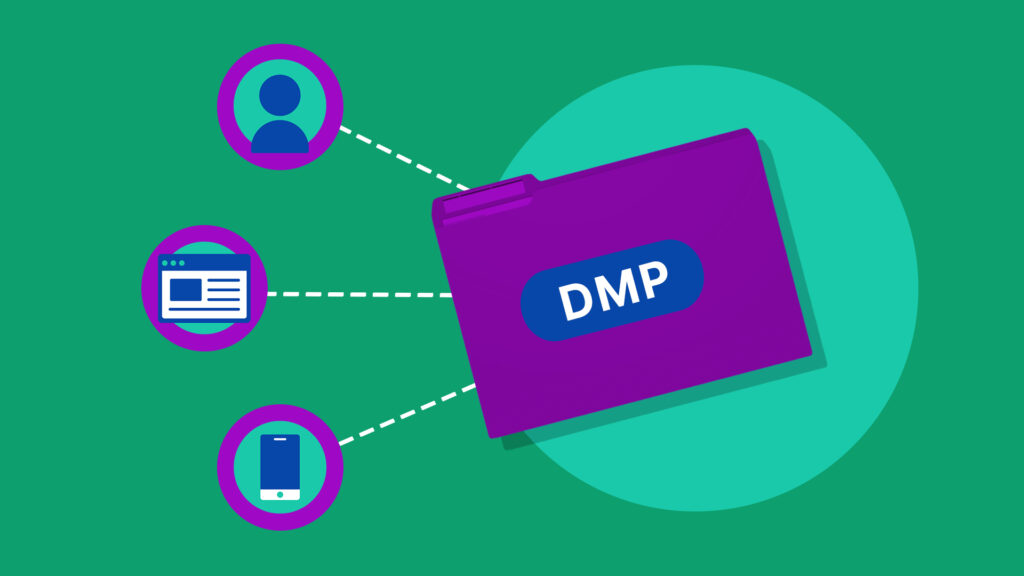
In 2026, the way businesses collect, manage, and activate consumer data has never mattered more. Privacy regulations are tightening, third-party cookies are increasingly deprecated, and audiences expect relevant, personalized experiences at every touchpoint. Navigating all of this requires the right data infrastructure — and for many marketing teams, that starts with a data management platform (DMP). So what exactly is a DMP, and how can you use one to engage audiences and build your brand? Here’s everything you need to know.
What Is a Data Management Platform?
A data management platform is a sophisticated tool that you can use to collect, organize, and leverage large sets of consumer data. It enables you to gather data from all sources, including your website, apps, customer relationship management systems, and third-party sources.
A DMP will tear down data silos and help you unify the information you collect, thereby allowing you to create holistic customer profiles and engage in targeted marketing campaigns. In simpler words, a DMP will put all of your data together so you can actually use it.
Data Management Platform vs. Customer Data Platform
A customer data platform (CDP), while similar to a data management platform, focuses on collecting and unifying first-party customer data. That’s information you collect yourself, whether it comes from your website, app, or any other digital asset that your business manages directly.
A DMP, on the other hand, primarily deals with anonymized data, including first, second, and third-party data. Its primary function is to support audience segmentation and help guide targeting efforts for your marketing campaigns. As such, a DMP is generally used to build broader audience segments for targeted advertising.
- Learn more about CDP vs DMP.
Data Management Platform vs. Demand-Side Platform
A demand-side platform (DSP) is used to purchase and manage digital ad inventory. It allows you to buy ad space across multiple ad exchanges in real time. In turn, you can ensure your content is shown to the right audience members at the right time in their journeys by strategically buying programmatic advertising slots.
In contrast, a DMP doesn’t handle the acquisition of ad space. Instead, it provides you with the data necessary to make informed purchasing decisions. You can use a DMP in conjunction with your DSP to engage in more precise audience targeting and reduce marketing waste.
- Learn more about DMP vs DSP.
Data Management Platform Benefits
Proper use of a data management platform can provide several key benefits, including the following:
1. Enhanced Audience Segmentation
A DMP helps you divide your overall customer base into subgroups based on their shared interests and behaviors. Doing so will make it much easier to create personalized content that speaks to each niche’s specific wants and needs.
2. Elevated Personalization Capabilities
Your audience wants offers and ads that are relevant to them. Consumers increasingly tune out generic messaging — and the data backs this up. Where only 57% of people say they would click on a general advertisement for a company they are familiar with, 71% of consumers would click on it if it were personalized.
With that in mind, a data management platform will help you meet consumer expectations by providing the insights you need to get personal with your next campaign.
3. Heightened Marketing Efficiency
A DMP can also work to streamline your marketing efforts by providing a centralized resource for planning your campaigns. Your team won’t have to waste an entire morning hunting down a specific report or manually searching for data across multiple platforms. They’ll be able to quickly find the information they need to support your campaign and execute it.
4. Improved Data Integration Solutions
Sifting through pages of consumer information that’s scattered across multiple systems is a headache that becomes a thing of the past with a DMP, as it will integrate all of your key apps and systems.
5. Comprehensive Analytics and Insights
Ultimately, winning at digital marketing involves learning your audience’s likes and dislikes. And a DMP helps you do just that. Top solutions have built-in analytics tools that you can use to assess and interpret information about your audience and their preferences. Use the data you gather to create greater, more personalized content for your campaigns.
Types of Data Collected
As mentioned earlier, a data management platform can collect, organize, and consolidate three main types of data:
First-Party Data
First-party data includes any information you gather directly from customers. For instance, suppose that you manage an e-commerce platform and require consumers to create an account on your website to complete a purchase. Any information you gather as users create their accounts is first-party data.
As such, first-party data is highly valuable because it is often more detailed, accurate, and relevant than secondary or tertiary customer information. With ongoing shifts away from third-party cookies, first-party data has become the most reliable foundation for audience targeting strategies.
Second-Party Data
Second-party data is, essentially, someone else’s first-party data that you gain access to through a partnership. For example, you might partner with another company to share their customer data, thus giving you additional insights into your target audience.
Second-party data is valuable because it allows you to expand your reach without relying on third-party sources.
Third-Party Data
Third-party data is gathered by external organizations and sold to other companies. It is aggregated from various sources and is often used to enhance audience segmentation and targeting. As privacy regulations such as GDPR and CCPA continue to evolve, and as third-party cookie support winds down across major browsers, marketers are becoming more selective about how they use third-party data. If you rely on it, make sure the data has been collected ethically and in compliance with current privacy regulations.
How Do Data Management Platforms Work?
Your business relies on integrations with websites, apps, customer relationship management (CRM) systems, and third-party providers to gather data. Once imported into your data management platform, that data will be organized and categorized.
The DMP will analyze the collected data to identify patterns, trends, and insights. Based on its results, the DMP will create detailed audience segments, grouping individuals with similar characteristics and behaviors. In turn, you’ll be able to understand your audience’s behaviors and preferences, allowing you to create more targeted marketing campaigns.
Lastly, the data management platform will integrate the data back into other marketing tools, such as your CRM or DSP, letting you execute those targeted marketing campaigns.
Data Management Platform Examples
Many companies use DMPs to enhance their marketing efforts. A retail business, for instance, might use one to collect data from its website, apps, and CRM system. That data will then be used to create detailed audience segments, allowing the business to deliver personalized marketing messages to different groups.
Another example could be a media company that uses its data management platform to collect information from various sources, such as its social media pages and websites. The company could then use that data to optimize targeting and improve the reach of its marketing campaigns.
Finding Your Target Audience With Performance TV
A DMP can help marketers organize and activate audience data, but it is only one piece of a stronger advertising strategy. MNTN helps brands put audience insights into action on premium streaming TV, connecting smarter targeting with measurable performance outcomes.
Here’s how MNTN Performance TV helps marketers turn data strategy into better CTV advertising results.
- MNTN Matched — MNTN helps advertisers use audience and behavioral signals to reach households more likely to engage, convert, and drive stronger campaign performance.
- Integrations and APIs — Flexible integrations help marketers connect CTV campaigns with the broader marketing stack, making it easier to align TV advertising with existing data workflows.
- Reporting Suite — Real-time reporting gives advertisers a clearer view into campaign performance, helping teams analyze results and make smarter optimization decisions.
- Verified Visits™ — MNTN helps marketers measure site visits and conversions tied to ad exposure, giving brands a better understanding of how CTV platforms contribute to performance.
- Automated Optimization — MNTN continuously adjusts campaign delivery based on performance signals, helping teams improve efficiency while media is still live.
Put your audience strategy to work with measurable CTV performance—sign up today with MNTN’s self-serve software.
Data Management Platforms: Final Thoughts
A data management platform can be a valuable tool that works to enhance your marketing efforts and increase your reach. The platform makes the biggest impact when combined with other marketing tools, including innovative solutions like MNTN Matched. If you’re ready to take your marketing to the next level, explore MNTN Performance TV and our proprietary tools designed to get you noticed today.
Want a Closer Look?
Discover how Performance TV delivers revenue, conversions and more through the power of Connected TV. Request a demo today to speak to an expert.