Customer Journey Funnel: What Is It & How Does It Work?
Daniel Stock | 7 Min Read
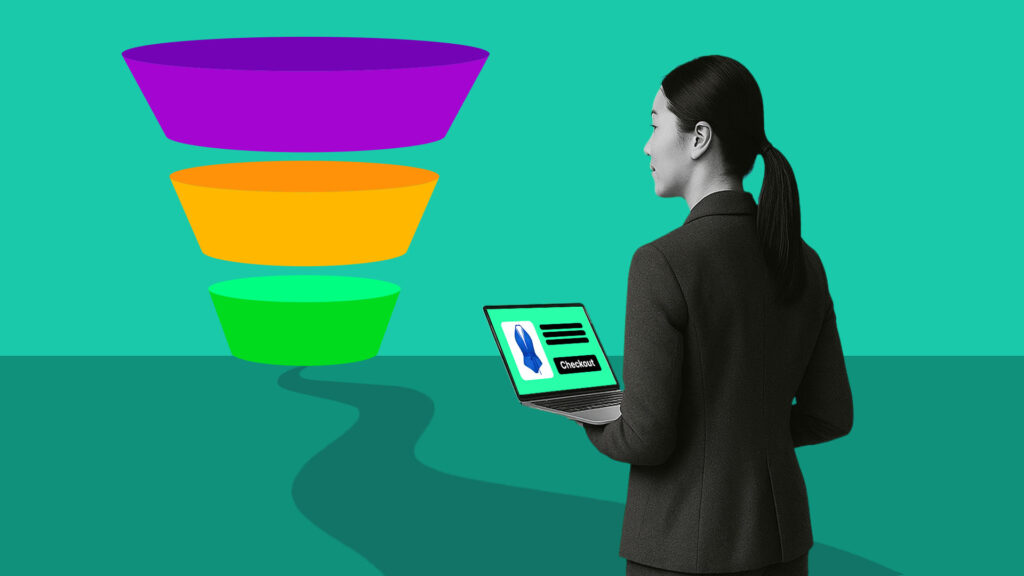
Understanding how consumers interact with your brand puts you in a stronger position to design touchpoints that resonate and fuel steady growth. One of the clearest ways to map those interactions is the customer journey funnel, a strategic framework for attracting, engaging, and retaining customers across the entire experience, including everything that happens after a sale closes.
If sharpening your marketing strategy is a priority this year, a well-built customer journey funnel is one of the most effective places to begin. Here’s what you need to know.
What Is a Customer Journey Funnel?
A customer journey funnel is an observable representation of the stages a consumer goes through before, during, and after making a purchase. It begins with their very first interaction with your brand and ends when they become a loyal advocate. Each stage represents a critical point where your marketing and sales teams can engage with leads to move them closer to conversion.
Customer Journey Funnel vs. Sales Funnel
The customer journey funnel and sales funnel are similar visualization tools. However, unlike the customer journey, sales funnels end when someone makes a purchase (that is, they convert).
The key difference is that the customer journey funnel includes retention and advocacy. It is focused on the entire consumer lifecycle, whereas the sales funnel is solely about completing sales.
Benefits of a Customer Journey Funnel
Some of the key advantages include the following:
1. Enhanced Customer Engagement
By identifying where a customer is along their journey, you can deliver personalized content that speaks directly to their needs and pain points. That will increase engagement and build trust over time.
2. Improved Conversion Rates
When your messaging aligns with a customer’s mindset at each stage, you’re more likely to guide them toward a purchase. That alignment boosts your overall conversion rates and improves sales volume.
3. Streamlined Marketing Efforts
You can’t afford to waste your marketing dollars, and that means you need to make every ad and piece of content count. A customer journey funnel will provide the proper structure for your marketing campaigns so that you can allocate resources more effectively.
4. Better Customer Retention
The customer journey funnel includes post-transaction interactions, such as following up with new customers and nurturing feelings of loyalty. These distinct stages help you focus on maintaining relationships with customers after the sale while reducing churn.
5. Data-Driven Insights
A customer journey funnel can take the guesswork out of marketing and campaign planning. You can visualize what customers need at each stage and identify where leads drop off.
Customer Journey Funnel Stages
Traditional funnels consist of five customer journey stages, which are as follows:
Stage 1: Awareness
Before someone can make a purchase, they need to know about your brand and the kind of value it provides. They may come across a blog post or social media ad of yours or perhaps find you via a Google search. In this stage, you want to provide valuable content that educates or entertains.
While certain types of awareness content can include a light call to action (CTA), you don’t want to come off as pushy; give your audience a chance to learn about your products or services in a low-pressure setting. Once they are intrigued, then you can target them with a more direct CTA.
Stage 2: Consideration
Here, the customer is aware of your brand and is now exploring whether your products are right for them. They might compare your offerings with similar products or read reviews. Your goal is to build trust and differentiate your brand from the competition. Testimonials, email drip campaigns, and free resources (like eBooks) can help you drive people to the next stage.
Stage 3: Decision
The customer is ready to make a purchase, and that means it’s up to your sales team and website to offer clear value propositions and compelling CTAs that can close the deal. Make sure that the checkout process is easy and user-friendly, too; you don’t want to lose the sale at the last second because things are clunky and frustrating.
Stage 4: Retention
Making a sale is great, but keeping customers for the long haul is better. As soon as the transaction is complete, start building loyalty and focusing on retention. Send your new customer an automated thank-you message, and if you offer a loyalty program, encourage them to sign up.
You should also provide frequent updates about their order status so they know when their product will arrive. Conversely, if you offer a service, include onboarding and setup details so the consumer can hit the ground running.
Stage 5: Advocacy
Your goal is to turn satisfied customers into brand advocates who refer others and leave positive reviews. Referral and loyalty programs are some of the best tools for promoting advocacy. These programs incentivize consumers to refer their friends and family to your brand and can drastically increase your reach. Ultimately, happy customers can become your most powerful marketing channel.
How to Build a Customer Journey Funnel
Here’s how to build your customer journey funnel:
- Identify each stage of interaction your customer has with your brand
- Create buyer personas tailored to several segments within your customer base
- Align content with each stage
- Select the right channels and tools
- Ensure your marketing, sales, and customer service teams are aligned
When building your funnel, gather input from any department that has a direct impact on the customer journey. A collaborative approach will help you address the pain points consumers encounter at every level of the funnel and more effectively meet the needs of your target audience.
Measuring Customer Journey Funnel Success
Once you’ve implemented your funnel, measure how impactful it is by tracking these key metrics:
- Traffic sources
- Conversion rates
- Customer lifetime value
- Churn
The more data you gather, the better. Integrate information from multiple sources, including Google Analytics and your CRM software.
How to Optimize a Customer Journey Funnel
No customer journey funnel is perfect, and that means you will need to continuously improve yours so that it accurately reflects the customer journey and helps you deliver better experiences.
Here are some tips to help you work toward establishing an even better funnel:
- A/B test your content and CTAs
- Segment your audience
- Automate where possible to save time
- Solicit feedback from your audience
- Regularly review and update your strategy
Once you find something that works, build on that success. You should also use these tips to find and fix or replace what doesn’t work.
How Performance TV Connects the Dots
Want to align your advertising with every stage of the customer journey funnel? MNTN’s platform helps you build full-funnel Connected TV (CTV) advertising campaigns that drive results, from first impression to final conversion. With AI-powered targeting, real-time attribution, and automated optimization, your ads are designed to meet customers wherever they are in the funnel.
Here’s how MNTN Performance TV supports the entire journey:
- MNTN Matched — AI-driven targeting ensures your OTT ads reach the right audience based on their funnel stage and intent signals.
- Premium CTV Inventory — Engage viewers on top streaming networks, whether you’re building awareness or driving conversions.
- Verified Visits™ Attribution — Tracks site visits and conversions tied to CTV exposure, helping you measure funnel effectiveness.
- Automated Optimization — AI fine-tunes your campaign in real time, improving efficiency and performance across the funnel.
- Reporting Suite — Access real-time insights to see how viewers move through the journey, and where your ads make the biggest impact.
Run CTV campaigns that perform at every funnel stage by signing up today to get started with MNTN’s self-serve software.
Customer Journey Funnels: Final Thoughts
The customer journey funnel helps you see your business from the customer’s perspective and creates a roadmap that ensures you deliver value at every stage of the experience. Prioritizing engagement and retention promotes customer acquisition and long-term relationship building. The result is sustainable growth.