Video Advertising Trends: What to Watch for in 2026
Daniel Stock | 7 Min Read
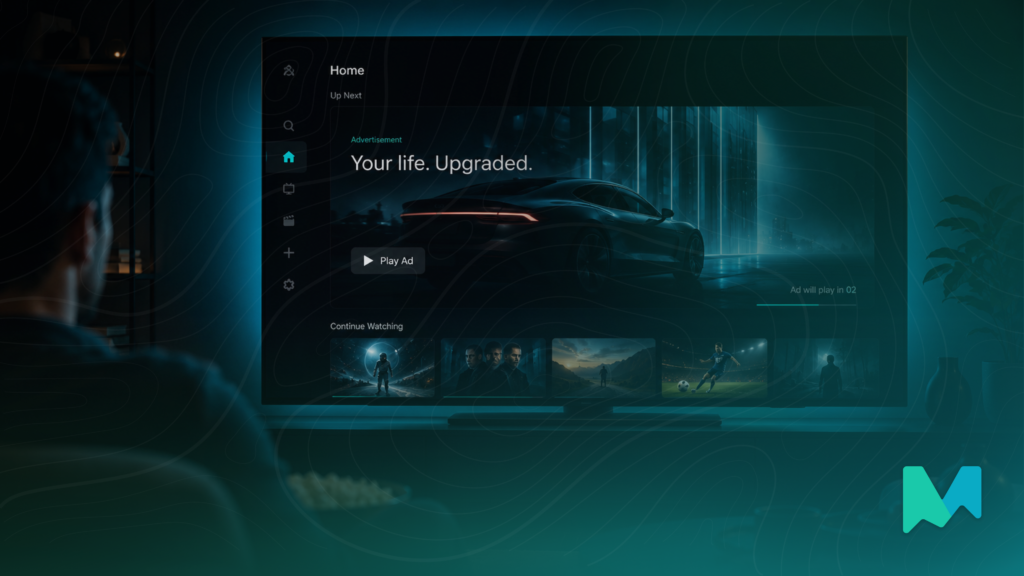
Video advertising has always moved fast, but 2026 is shaping up to be more than another year of platform tweaks and shiny new formats. Connected TV advertising is still climbing, social video is still commanding attention, and AI is moving deeper into the creative, targeting, and measurement workflows marketers use every day. IAB projects CTV ad spend to grow 13.8% in 2026, while EMARKETER expects U.S. CTV upfront ad spending to surpass primetime linear TV for the first time — a pretty clear sign that video’s center of gravity keeps shifting.
For marketers, the takeaway is simple: video is no longer one channel, one screen, or one creative strategy. It is a performance ecosystem, stretching from living room screens to vertical feeds to shoppable moments and AI-generated TV commercials. The brands that win in 2026 will be the ones watching the right signals now and building video strategies flexible enough to follow the audience wherever they press play next.
1. AI Hyper-Personalization
AI is making personalized video more practical. Marketers can now build variations around audience needs, product interests, funnel stage, location, or campaign timing without recreating every asset from scratch.
That does not mean every viewer needs a one-of-one ad. The smarter play is to personalize the pieces that change performance: the hook, product proof, offer, call-to-action, and visual emphasis. Use AI to make creative more relevant, not more invasive.
- Prospecting videos with different problem statements by audience
- Retargeting videos tied to viewed products or categories
- Seasonal edits that refresh the message without rebuilding the concept
2. AI Video Remixing
AI video remixing helps advertisers get more mileage from strong creative. A high-performing CTV spot, social video, product demo, or testimonial can be adapted into new lengths, formats, and messages for different channels.
IAB reported that 86% of buyers are using or planning to use generative AI to build video creative, and buyers project that generative AI creative will make up 40% of all ads by 2026. That makes creative strategy more important, not less. AI can scale the versions; marketers still need to decide what each version should do.
3. Short-Form Micro-Videos
Short-form video is shifting toward tighter, more modular micro-videos. These assets are built around one message and one action: a six-second product proof, a 10-second offer, or a 15-second problem/solution spot.
The rule is simple: get to the value fast. Show the product, the problem, or the outcome before the viewer has time to scroll, skip, or multitask. Micro-videos work best when they support a bigger campaign instead of trying to carry the entire story alone.
4. Interactive Videos
Interactive video turns passive viewing into a more active signal. Think QR codes on CTV, clickable product cards, social polls, choose-your-own-path landing page videos, or demos that let viewers explore the product on their terms.
The best interactive ads make the next step easier. A scan, click, or selection should help the viewer learn, compare, shop, or request more information. If the interaction distracts from the message, it is probably doing too much.
5. Shoppable Videos
Shoppable TV continues to bring content and commerce closer together. For e-commerce and direct-to-consumer brands, that means video can introduce the product, show it in action, address a common objection, and move the viewer toward purchase in one flow.
Strong shoppable creative usually includes:
- A clear product benefit in the first few seconds
- Visual proof of how the product works or fits into real life
- Simple offer, pricing, or availability cues when relevant
- A direct next step, such as shop now, scan to learn more, or add to cart
6. Silent Video Optimization
A lot of video gets watched with the sound off. That is not a limitation — it’s part of the brief. Silent video optimization ensures the story still works through visuals, captions, supers, pacing, and product moments.
Marketers should make every key message visible, not just spoken. Use readable captions, short on-screen text, clear first-frame branding, and a visible call-to-action. Sound can make a video stronger, but it should not be the only thing holding the ad together.
7. Authentic UGC and Lo-Fi Content
User-generated content (UGC) and lo-fi creative keep gaining traction because they feel closer to how people already consume video. They are direct, human, and often easier to trust than a heavily polished brand spot.
Still, authentic does not mean careless. Wyzowl found that 89% of consumers say video quality affects trust, so brands still need clear audio, good lighting, legal usage rights, and a tight edit. The sweet spot is casual creative with performance discipline.
8. Vertical and Hybrid Formats
Vertical video is now standard for mobile-first environments, but 2026 is really about format flexibility. A single campaign may need vertical cuts for social, horizontal cuts for CTV and YouTube, and additional versions for product pages or display placements.
Plan for those versions before production starts. Leave safe space for text, capture shots that can crop cleanly, and define which messages need to survive shorter edits. The goal is not to force one asset everywhere. It is to make one idea work naturally in more places.
9. AR/VR Immersive Experiences
Augmented reality (AR) and virtual reality (VR) are not everyday tools for every brand, but they are useful where experience builds confidence. Furniture, beauty, apparel, travel, automotive, and entertainment brands can use immersive formats to help people visualize, try, compare, or explore.
The practical test is simple: does the experience remove doubt or create meaningful engagement? If an AR try-on helps someone buy the right shade or a virtual showroom makes comparison easier, it has a job. If it only looks futuristic, it may be a distraction.
10. Video SEO and CTV Advertising
Video search engine optimization (SEO) and CTV advertising are connected by discoverability. SEO helps people find video content; CTV helps brands reach valuable audiences in premium, lean-back environments.
For SEO, keep the fundamentals tight: clear titles, descriptive metadata, transcripts, captions, strong thumbnails, and landing pages that match the video’s promise. For CTV, connect creative, audience, and outcome. A great CTV ad should not sit in a silo. It should support paid search, paid social, email, retail media, and onsite conversion paths.
Why You Need Performance TV
Video advertising in 2026 is moving toward faster creative cycles, smarter audience signals, and clearer proof of what every campaign drives. MNTN helps marketers meet that moment with premium TV advertising campaigns that connect video’s storytelling power to targeting, automation, and measurable performance.
Here’s how MNTN Performance TV helps marketers stay ahead of video advertising trends.
- QuickFrame AI — QuickFrame AI helps brands create video for TV, social, and beyond, making it easier to refresh creative as campaigns, audiences, and trends evolve.
- MNTN Matched — AI-powered audience targeting helps advertisers reach households more likely to visit, convert, and take action, giving video campaigns sharper precision from the start.
- Automated Optimization — MNTN optimizes campaigns using real-time data and performance goals, helping marketers improve efficiency while video ads are still live.
- Premium CTV Inventory — MNTN gives brands access to premium streaming inventory, helping advertisers run video campaigns in high-quality, brand-safe TV environments.
- Reporting Suite — Real-time reporting helps teams evaluate campaign performance, monitor trends, and understand how video advertising contributes to broader business goals.
Turn video advertising trends into measurable streaming ads—sign up today with MNTN’s self-serve software.
Video Advertising Trends: Final Thoughts
Video advertising in 2026 will reward teams that move quickly, test intelligently, and connect creative ideas to business outcomes.
The strongest brands will not chase every format; they will build flexible systems for creating, measuring, and improving video across the channels that matter most.
Keep the strategy simple: make the creative useful, make the experience easy, and make the results measurable.
Want a Closer Look?
Discover how Performance TV delivers revenue, conversions and more through the power of Connected TV. Request a demo today to speak to an expert.