What is VOD (Video on Demand) and How Does it Work?
Daniel Stock | 5 Min Read
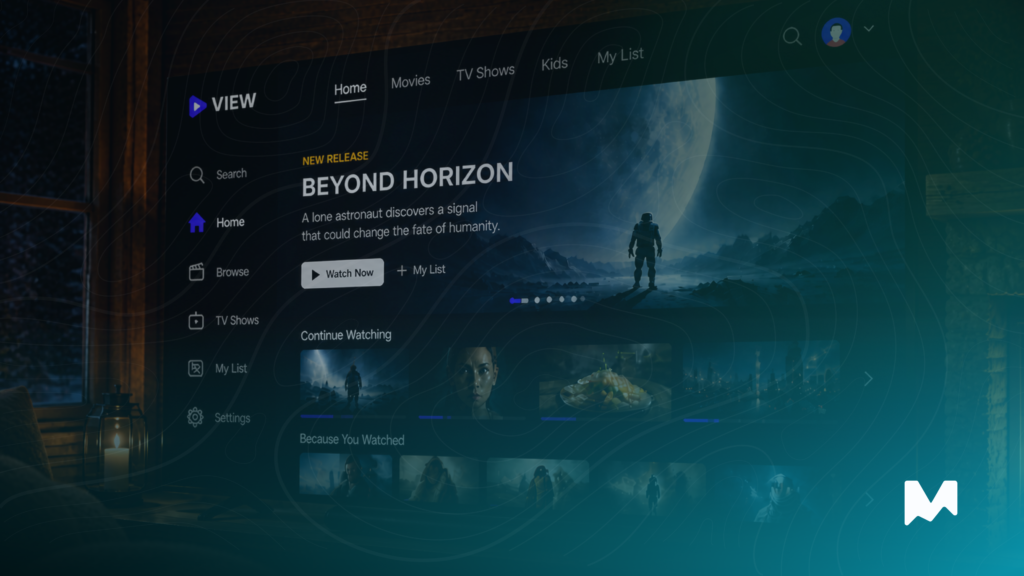
In today’s digital-first media landscape, Video on Demand (VOD) has transformed how audiences consume entertainment, shifting power from broadcasters to viewers who now expect instant access to premium content.
For marketers and advertisers, this evolution represents a massive opportunity to reach highly engaged audiences on Connected TV platforms with precision targeting and measurable results. As streaming continues to dominate television viewing, capturing a record 47.5% share in December 2025 according to Nielsen, understanding VOD is essential for driving performance in CTV advertising.
What is VOD?
Video on Demand (VOD) is a digital streaming service that lets viewers watch video content whenever and wherever they choose, without being tied to a traditional broadcast schedule. It delivers movies, TV shows, and short-form videos over the internet to any connected device, giving users full control over playback timing and selection.
VOD vs. Linear TV
Linear TV follows a fixed schedule where content airs at predetermined times, forcing viewers to tune in or miss it entirely. VOD flips this model by storing content on servers for instant, on-demand access, enabling pause, rewind, and skip functions that linear programming simply cannot match.
Benefits of Video on Demand
Marketers who understand VOD’s advantages can better align their TV advertising campaigns with how modern audiences actually watch television.
1. Ultimate Control and Flexibility
Viewers dictate when, where, and how they watch, which translates to longer session times and more opportunities for brands to deliver contextually relevant ads.
2. Device Compatibility
VOD content streams seamlessly across smart TVs, smartphones, tablets, and laptops, ensuring brands reach audiences on the screens they use most.
3. Personalized Experience
Algorithms analyze viewing habits to recommend content, allowing advertisers to serve targeted messages that feel native rather than intrusive.
4. Offline Viewing
Many platforms let users download titles for later playback without an internet connection, expanding reach to travelers and users in low-bandwidth areas.
5. Vast Content Library
Endless catalogs of originals, classics, and niche programming keep audiences on-platform longer, increasing ad inventory and brand exposure.
How Does Video on Demand Work?
At its core, VOD relies on cloud-based servers that store compressed video files, which are then delivered via high-speed internet using adaptive bitrate streaming protocols like HLS or DASH. Content is encoded into multiple quality levels so the platform can automatically adjust resolution based on the viewer’s connection speed, delivering a buffer-free experience.
For advertisers, this infrastructure supports real-time ad insertion, precise audience targeting at the household level, and performance tracking that linear TV lacks.
Types of Video on Demand Services
VOD platforms have evolved into several distinct business models, each offering unique opportunities for content creators and advertisers alike.
Subscription Video on Demand (SVOD)
SVOD services charge a recurring monthly or annual fee for unlimited access to a curated library of content. Popular examples include Netflix, Disney+, Peacock, and Hulu, where premium originals drive subscriber loyalty while ad-supported tiers are increasingly common to boost revenue.
Ad-Supported Video on Demand (AVOD)
AVOD platforms offer free content funded entirely by advertising, attracting price-sensitive viewers who tolerate commercials in exchange for no subscription cost. Services like Tubi, Pluto TV, and The Roku Channel have seen explosive growth, with free, ad-supported streaming services now accounting for the majority of new streaming subscriptions.
Transactional Video on Demand (TVOD)
TVOD lets users pay for individual titles or events on a pay-per-view or rental basis, ideal for blockbuster releases or live sports. Platforms like Amazon Prime Video and Apple TV allow one-time purchases or short-term rentals without a full subscription commitment.
Hybrid VOD Models
Hybrid models combine elements of SVOD, AVOD, and TVOD within a single platform to maximize revenue streams and audience reach. Major services now layer ad-supported plans alongside premium subscriptions and transactional options, giving marketers flexible placement opportunities across free and paid audiences.
Advertising on VOD Platforms
On VOD platforms, particularly AVOD and ad-supported SVOD tiers, advertisers benefit from programmatic buying, household-level targeting, and real-time performance measurement. Ads are dynamically inserted into content streams, allowing brands to reach viewers based on demographics, viewing behavior, and even contextual relevance within specific shows.
This shift has driven significant budget movement into OTT advertising, where campaigns can be optimized for conversions, traffic, and ROAS with the same precision marketers expect from digital channels.
Why You Need Performance TV
VOD gives viewers the flexibility to watch content on their own schedule, but for marketers, it also opens the door to more precise and measurable TV advertising. MNTN helps brands turn that shift in viewing behavior into performance-driven opportunity, making it easier to reach streaming audiences with campaigns built around outcomes, not guesswork.
Here’s how MNTN Performance TV helps marketers make the most of VOD advertising.
- Premium CTV Inventory — MNTN gives advertisers access to premium streaming inventory across top networks and apps, helping brands reach VOD audiences in high-quality, brand-safe environments.
- MNTN Matched — Advanced audience targeting helps marketers zero in on households more likely to engage, convert, and drive stronger performance from streaming campaigns.
- Automated Optimization — MNTN continuously adjusts campaign delivery based on performance signals, helping teams improve efficiency while media is still live.
- Verified Visits™ — MNTN helps marketers measure site visits and conversions tied to ad exposure, giving advertisers a clearer view into how VOD campaigns contribute to performance.
- Reporting Suite — Real-time reporting helps marketers evaluate results, monitor audience trends, and keep VOD advertising aligned with broader business goals.
Turn VOD viewership into measurable advertising performance—sign up today with MNTN’s self-serve software.
VOD (Video on Demand): Final Thoughts
Video on demand has permanently reshaped television by giving viewers control, choice, and convenience while creating a more efficient, data-rich environment for advertisers. As the global VOD market accelerates toward hundreds of billions in value and streaming surpasses linear TV in total viewing share, brands that master CTV strategies on these platforms will capture the highest-intent audiences at scale.
Want a Closer Look?
Discover how Performance TV delivers revenue, conversions and more through the power of Connected TV. Request a demo today to speak to an expert.