Ecommerce Customer Journey Map: Complete Guide
Daniel Stock | 7 Min Read
Each year, ecommerce sales chip away at the market share of brick-and-mortar stores; in fact, as of 2025, these transactions account for nearly a quarter of all retail sales. To capitalize on this shift in purchasing locations and drive more sales for your online business, you need to understand the concept of the customer journey.
To that end, an ecommerce customer journey map will help you identify key touchpoints each of your customers interacts with and pinpoint where promising leads drop out of the sales pipeline. Here’s everything you need to know.
What Is an Ecommerce Customer Journey Map?
An ecommerce customer journey map is a visual representation of how a customer interacts with your brand across various touchpoints. It encompasses everything from the moment they discover your brand to their interactions with your team after making a purchase.
Mapping the ecommerce shopping journey sheds light on how people feel and their pain points during each stage. When done right, it helps you find and alleviate points of friction so you can drive more conversions.
Customer Journey vs. Buyer Journey
Though you might consider the customer journey and buyer journey similar, they aren’t quite the same.
The buyer journey focuses strictly on the decision-making process, ending at the point of purchase. Mapping it out can be valuable when retooling your marketing strategy or preparing a new ad campaign. Still, sometimes, you need a more encompassing picture of the consumer experience, and that is where customer journey mapping comes into play.
Like the buyer journey, the customer journey begins at the awareness stage. However, it is broader, extending into the post-purchase experience. Mapping the entire journey helps reveal how customer support and follow-up messaging impact brand loyalty.
Benefits of Ecommerce Customer Journey Mapping
Mapping a customer’s ecommerce shopping journey provides the following benefits:
1. Improved Customer Experience
Journey mapping spotlights every friction point—slow load times, clunky sign-ups, abandoned carts—so you can remove blockers before they impact revenue. Even required steps (like account creation) can convert better when paired with smarter UX and first-order incentives.
2. Increased Conversion Rates
When you understand how customers move through the funnel, and what slows them down, you can tighten your messaging and sharpen your CTAs. A smoother path to purchase means fewer drop-offs and more closed carts.
3. Enhanced Personalization
Journey mapping helps you tailor messaging to each touchpoint without overstepping. Transparency around data use builds trust, and trust drives repeat business.
4. Optimized Marketing Strategies
A mapped journey reveals what channels pull the most weight at each stage, so you can double down on what works. Reallocate budget to your highest-performing platforms and tailor content to the mindset behind the click.
5. Reduced Customer Churn
Understanding the post-purchase experience is just as important as the path to conversion. Journey maps expose when and where customers disengage—so you can fix issues fast and turn one-time buyers into long-term loyalists.
How Does Ecommerce Customer Journey Mapping Work?
At its core, journey mapping is all about looking at the ecommerce experience from your customer’s point of view. In order to do that effectively, you will need to do the following:
- Gather data
- Create personas
- Outline key stages
- Determine how consumers feel
High-quality data from multiple sources lays the foundation for a great map. You need qualitative and quantitative data to piece together what consumers want and how they interact with your brand.
Components of an Ecommerce Customer Journey Map
A map of the ecommerce shopping journey must include the following elements:
Customer Personas
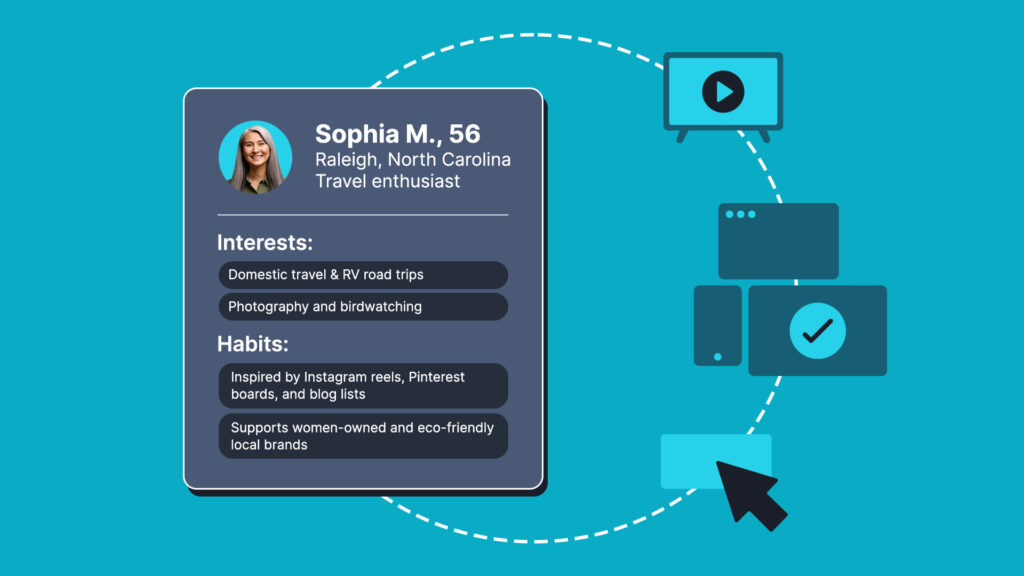
A customer persona, while fictional, still represents a key segment of your audience. You should develop a few personas so you can better understand the motivations, behaviors, pain points, and goals of core niches within your customer base. Your personas may include budget-conscious shoppers, trend-savvy customers, and first-timers who have never bought your products before.
Touchpoints
Marketing touchpoints are any interaction a customer has with your brand. Some examples include things like:
- Social media ads
- Emails
- Product pages
- Checkout process
- Landing pages
- Google Ads
- Organic posts and blogs
- Order confirmation emails
- Post-purchase support calls
Every touchpoint needs to be smooth and on-brand; consistency is key to providing a great customer experience.
Stages of the Journey
Your ecommerce map should list all stages of the customer journey:
- Awareness
- Consideration
- Purchase
- Post-purchase
- Retention
Map out what a customer needs at each stage (i.e., information, timely support) and how you can give it to them.
Emotions and Pain Points
You need to show empathy for your audience. Ask questions like:
- How does the customer feel at each stage?
- Are they excited or confused?
- What challenges or questions are holding them back?
The insights you gain from these answers will help you design better experiences.
Goals and Expectations
A customer has a goal at every stage. Sometimes, they just want to see what products you have available or how much they cost. In the later stages, they may want to confirm that your shipping is fast and reliable. Your job is to make it easy for customers to find answers, no matter how deep into the ecommerce sales funnel they are.
Channels and Devices
No journey map is complete without a list of channels that your consumers use to interact with your brand. Start by identifying the core channels in your marketing mix, such as Facebook, Instagram, your website, TV ads, and email. A useful journey map is omnichannel; it reflects the cross-platform way people shop online today.
You also need to consider the devices people use to interact with your brand. Your content should be optimized for desktop and mobile so you can maximize your reach.
How to Create an Ecommerce Customer Journey Map
As you prepare to map the ecommerce shopping journey, here’s what to do in a nutshell:
- Create your personas
- List every touchpoint
- Outline each stage
- Collect customer data
- Visualize the journey
- Identify gaps and opportunities
- Share the map with key teams
Once you implement your map, always work to improve it. Be willing to try new strategies and channels. Of course, don’t feel obligated to use every platform out there, either; stretching yourself too thin can lead to a marketing strategy that lacks focus.
- Learn More: How to Create a Customer Journey Map
Ecommerce Customer Journey Optimization Tips
Here are a few tips to make the most of your customer journey map:
- Run A/B tests to improve underperforming touchpoints
- Automate personalized emails
- Offer multiple chat options
- Make finding the right products easier
- Gather feedback from customers to uncover hidden friction
Remember, the customer journey evolves over time. Adapt to the latest trends and fine-tune your marketing strategy to deliver engaging experiences.
How Performance TV Connects the Dots
Want to turn browsers into buyers with a smarter strategy? MNTN’s platform helps ecommerce brands map and influence every stage of the customer journey with high-performance CTV advertising campaigns. From product discovery to post-purchase engagement, you’ll reach the right audience with the right message—and measure the impact in real time.
Here’s how MNTN Performance TV supports the ecommerce journey:
- MNTN Matched – AI-powered targeting reaches shoppers based on behavior, intent, and where they are in the buying process.
- Premium CTV Inventory – Showcase your brand and products on top streaming networks to drive discovery and action.
- Verified Visits™ Attribution – Tracks site visits and purchases tied to OTT advertising exposure, giving you visibility into key touchpoints.
- Automated Optimization – AI fine-tunes campaigns to drive stronger results across the ecommerce funnel.
- Reporting Suite – Access real-time data to understand how CTV impacts the path to purchase—from awareness to checkout.
Drive ecommerce growth with journey-driven CTV advertising—sign up today to get started with MNTN’s self-serve software.
Ecommerce Customer Journey Map: Final Thoughts
When you truly understand the ecommerce shopping journey, you can better meet the needs of consumers and eliminate frustration from the purchasing process. The result is improved loyalty and a higher conversion rate, all while taking the guesswork out of your marketing and sales tactics.
Want a Closer Look?
Discover how Performance TV delivers revenue, conversions and more through the power of Connected TV. Request a demo today to speak to an expert.