Omnichannel Customer Journey: Complete Guide for Advertisers
Daniel Stock | 8 Min Read
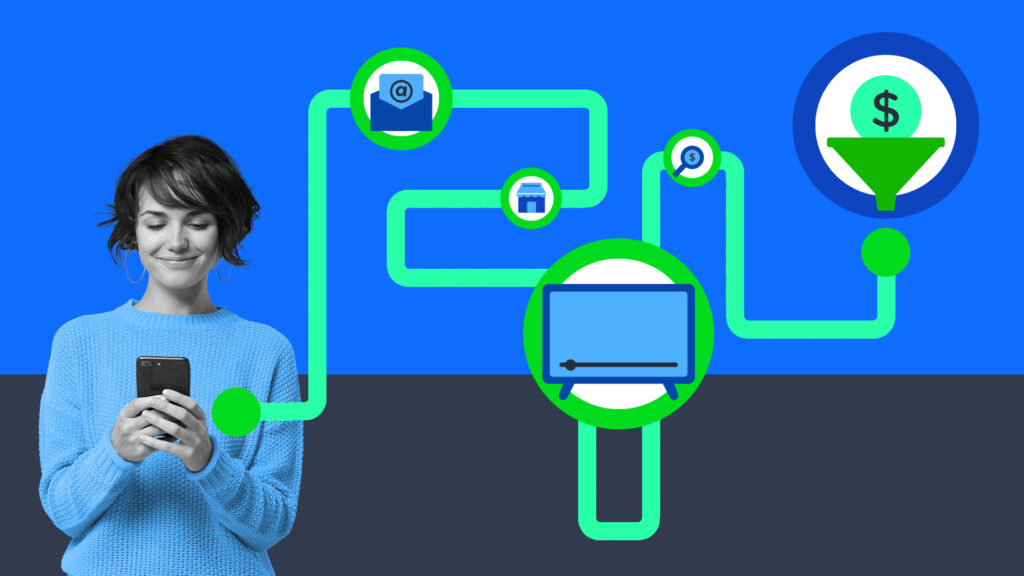
According to a study conducted among 46,000 retail shoppers, 73% of consumers use more than one channel (i.e., brand/store websites, social media pages, email, in-store experiences, etc.) to support their purchasing journey. Mapping out the omnichannel customer journey helps you understand when, where, and how consumers interact with your brand.
To help guide you through the process, we’ll break down what an omnichannel customer journey is and how it differs from a multichannel strategy. You’ll also get a glimpse into the benefits of journey mapping and learn tips on better connecting with your target audience across every touchpoint.
What Is an Omnichannel Customer Journey?
An omnichannel customer journey refers to the complex experience a consumer has with your brand across all channels and touchpoints.
For brands with brick-and-mortar stores, an omnichannel journey includes both digital and physical touchpoints. And if your business focuses exclusively on e-commerce, the journey will consist of each of the digital mediums where your customers connect with your brand and its products.
Providing an omnichannel approach ensures a consistent and unified experience for consumers. For instance, a consumer may discover your brand on social media, sign up for email alerts about new products, and ultimately make a purchase on your website.
However, merely supplying multiple channels for a customer to use does not mean the experience is omnichannel; a true omnichannel customer journey uses touchpoints as complementary resources for nurturing leads and driving sales.
Omnichannel vs. Multichannel Customer Journey
Most brands deliver a multichannel approach, which means they have a presence on multiple platforms. Technically speaking, a business with a physical storefront and a Facebook page is multichannel; however, the channels might function in isolation.
An omnichannel strategy connects these platforms to create cohesive marketing strategies and seamless customer journeys.
Benefits of Omnichannel Customer Journey
An effective omnichannel customer journey strategy delivers several benefits that will help you reach and convert customers more effectively. These include the following:
1. Seamless Customer Experiences
Any points of friction in the purchasing process can delay conversions or cost you transactions altogether. But if customers can easily transition from one channel to another, they are more likely to make a purchase.
2. Consistent Brand Messaging
Brand consistency builds trust, and omnichannel marketing ensures that your content maintains the same tone and value proposition across every medium.
3. Optimized Customer Engagement
Omnichannel customer journey mapping provides an end-to-end view of the consumer’s path to a purchase. And once you map the journey, you can deliver content and promotions relevant to whatever stage someone is in.
4. Personalized Customer Interactions
Collecting data across multiple channels empowers you to deliver personalized experiences. For example, you can use data gathered from a person’s social media interactions and website activity to target them with unique product offers in your next email campaign.
5. Comprehensive Performance Analysis
Connecting every channel in your marketing mix provides a big-picture view of the customer journey. Analyzing that information allows you to understand how each touchpoint contributes to conversions and what kinds of gaps are in your marketing mix.
How Does Omnichannel Customer Journey Work?
An omnichannel customer journey works by integrating all of your customer-facing channels, such as the following:
- Web pages
- Emails
- In-store ads/experiences
- Social media posts
- Paid ads
All of the content and channels should work together to create a cohesive experience. To be successful in that regard, you will need to do the following:
- Map every touchpoint
- Gather and consolidate data from all platforms
- Track behavior
- Automate personalized messaging
- Ensure consistent branding
The goal is to meet your customers wherever you are while allocating additional resources to their preferred channels.
Omnichannel Customer Journey Strategy: 8 Tips for Success
These eight tips will help you build an omnichannel customer journey that delivers solid results:
1. Understand Your Customer Touchpoints
Your first step involves figuring out where customers are interacting with your brand. These marketing touchpoints include search engines, email, and social ads. Once you list every touchpoint, identify the ones that are most popular among your target audience.
2. Create an Omnichannel Customer Journey Map
An omnichannel customer journey map visualizes how consumers move through your channels from awareness to purchase and beyond. It also helps you identify gaps and unlock opportunities for improvement.
The key customer journey stages are as follows:
- Awareness
- Consideration
- Decision
- Retention
- Advocacy
List what consumers may be feeling and what their pain points are at each stage. You should also identify what motivates them to continue their journey (i.e., education, pricing information, deals).
3. Integrate Data Across Channels
Integrating data from your customer relationship management (CRM) or customer data platform (CDP) is key to turning a multichannel strategy into an omnichannel journey. You need a single source of truth to promote smarter decision-making and ensure everyone’s journeys are interconnected.
4. Personalize the Customer Experience
Use the data you collect to target consumers with relevant content and personalized offers. Dynamic ads and product recommendations keep consumers engaged.
5. Ensure Consistent Messaging Across Channels
Make sure that your content maintains a uniform voice, tone, and design style. While you can (and should) adjust the length and format of content to fit each channel, all marketing assets must stay true to your brand identity.
6. Use Automation for Efficiency
Automation saves time and helps you capitalize on fleeting opportunities. Setting up an automated email response to welcome new users enables you to bring them deeper into your sales funnel when their motivation is at its peak. Similarly, adding chatbots to your website can give customers answers quickly, even outside of normal business hours.
7. Optimize for Mobile Users
As of 2025, over 65% of global website traffic comes from mobile devices. Therefore, your omnichannel customer journey must be mobile-friendly; making it easy for consumers to engage with your content and make purchases from their smartphones will undoubtedly boost your sales figures.
8. Continuously Analyze and Improve
Use customer journey analytics to measure customer behavior and pinpoint leaks in the customer journey. For instance, if a large percentage of customers are dropping off after visiting a specific product landing page, you’ll know that there’s an issue with that page. Use these kinds of insights to make targeted improvements to your marketing strategy and better customer experiences overall.
Omnichannel Attribution, Explained
One of the biggest advantages of an omnichannel strategy is more accurate attribution. In other words, you can more easily track and determine which touchpoints influence a customer’s decision.
Omnichannel attribution considers every interaction in a consumer’s decision-making process, giving you a complete picture of what’s working and allowing you to allocate your budget accordingly.
Some common multi-touch attribution models include the following:
- Linear: Attributes equal credit to all touchpoints
- Time Decay: Recent interactions receive more credit
- Position-Based: Focuses on the first and last interactions
- Data-Driven: Uses machine learning and advanced algorithms to assign credit
Compare these attribution models and choose the approach that best aligns with your business and the complexity of its sales cycle.
Trends in Omnichannel Customer Journey
Maintaining your edge means keeping up with new tools and behaviors that are shaping the omnichannel customer journey. Here are a few trends worth watching:
- The use of AI and predictive analytics
- Increased engagement with voice and chat interfaces
- A growing use of CTV advertising
While you don’t need to hop on every emerging trend, you must do what you can to keep your omnichannel strategy fresh and relevant.
How Performance TV Connects the Dots
Want to deliver a seamless experience across every touchpoint? MNTN’s platform helps you integrate Connected TV into your omnichannel customer journey, ensuring your messaging stays consistent—from email to search to streaming. With AI-powered targeting, real-time attribution, and automated optimization, your campaigns support every stage of the funnel with measurable results.
Here’s how MNTN Performance TV supports omnichannel strategy:
- MNTN Matched – AI-driven targeting syncs your streaming advertising campaigns with audience behaviors across digital channels.
- Premium CTV Inventory – Reach high-value viewers on top streaming networks, reinforcing your brand across platforms.
- Verified Visits™ Attribution – Connects CTV exposure to site visits and conversions, helping you measure CTV’s role in your larger strategy.
- Automated Optimization – AI fine-tunes your campaigns in real time to maintain consistent performance across the journey.
- Reporting Suite – Access real-time data to track how CTV interacts with your other channels and drives full-funnel results.
Unify your customer journey across channels—sign up today to get started with MNTN’s self-serve software.
Omnichannel Customer Journey: Final Thoughts
Consumers expect to be able to do business with brands on their terms, whether that means making a purchase directly on social media or heading to their local brick-and-mortar store to see products in person. Quite simply, the concept of the omnichannel customer journey is becoming the standard in today’s complex shopping ecosystem — it’s time for your marketing strategy to follow suit.
Want a Closer Look?
Discover how Performance TV delivers revenue, conversions and more through the power of Connected TV. Request a demo today to speak to an expert.