Multi-Channel Attribution: What Is It & How Does It Work?
Frankie Karrer | 8 Min Read
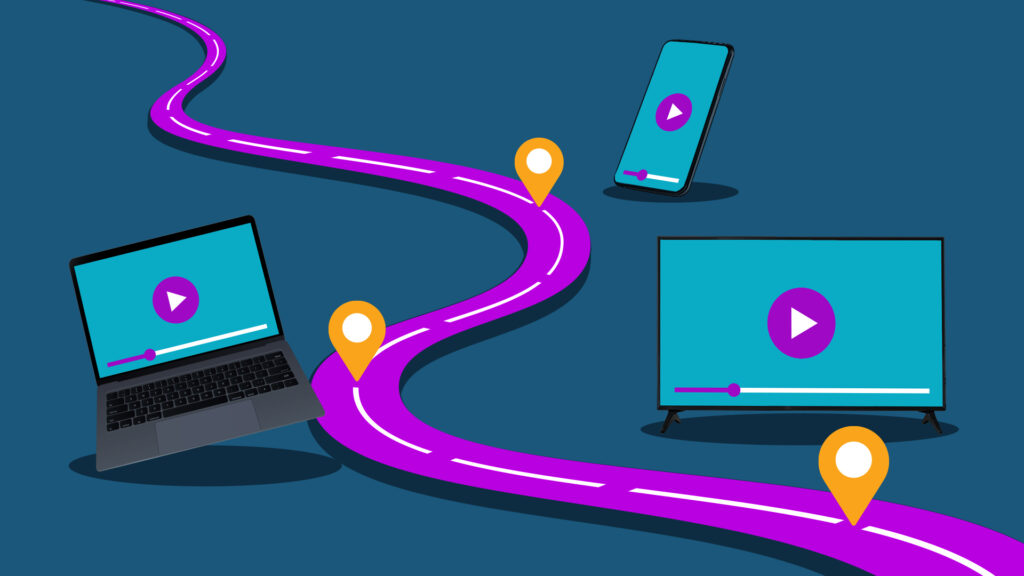
Knowing how a customer discovered your brand helps pinpoint which marketing channels drive the most success. That insight lets marketers allocate budgets smarter, doubling down on high-performers while refining underperformers.
With an omnichannel marketing approach, however, it can be tricky to figure out the first part: exactly which channel ultimately led to a sale. Many customers may have seen multiple ads on different platforms before deciding to do business with you. Multi-channel attribution models deliver a clearer picture, revealing which marketing touchpoints truly influence decisions and drive results. Here’s how it works.
What is Multi-Channel Attribution?
Multi-channel attribution is a measurement approach that assigns credit for a conversion across multiple marketing channels a customer interacts with, instead of crediting just one touchpoint. It helps marketers understand how channels like CTV, search, and social work together to drive performance and smarter budget decisions.
Multi-Channel vs. First-Touch
The first-touch attribution model gives all credit for a sale to the first method in which a customer interacts with a brand. With multi-channel attribution, you might assign more credit for the sale to your banner ad while acknowledging that your social media posts and pay-per-click ads also contributed to the sale.
Multi-Channel vs. Last-Touch
Similar to first-touch, the last-touch attribution model assigns full credit for a conversion or a sale to one marketing channel — in this case, the last point of contact.
Multi-Channel vs. Multi-Touch
Multi-channel attribution and multi-touch attribution are often mistaken for one another, but there are key differences between the two. While a multi-channel attribution model credits the channel itself, a multi-touch model would evaluate specific posts and ads within those channels.
Benefits of Multi-Channel Attribution
There are many advantages to multi-channel attribution, most notably:
1. Smarter Spending That Cuts Waste
Multi-channel attribution shows which channels actually influence conversions, helping you shift budget toward proven performance and away from wasted spend.
2. End-to-End View of the Customer Journey
By measuring every meaningful interaction, multi-channel attribution reveals how customers move from discovery to conversion, not just the final click.
3. More Accurate ROI Across the Entire Mix
Instead of overvaluing certain channels, multi-channel attribution captures the real contribution of every channel involved in driving results.
4. Personalization Based on Real Behavior
With clearer insight into how audiences engage across channels, marketers can tailor messaging and experiences based on real behavior, not assumptions.
How Does Multi-Channel Attribution Work?
Here’s a simple real-world example of multi-channel attribution in action:
A shopper first discovers your brand through a Connected TV (CTV) ad and later Googles your product category on their phone. A few days later, they click on a paid social ad, browse your site, and sign up for your email list, then finally return through an email offer and make a purchase.
In this scenario, the conversion didn’t come from one “magic” channel. It came from the mix working together. Multi-channel attribution assigns credit across the channels involved (CTV, search, paid social, email) based on the model you use, so you can see which channels tend to introduce demand, which ones build intent, and which ones reliably help close, and then invest accordingly.
Types of Multi-Channel Attribution Models
There are six common multi-channel attribution models you can use to credit different marketing channels; each model is defined by how it weights/credits various channels in your overall mix.
Linear Attribution
Linear attribution assumes that every potential customer interaction with your brand is equally responsible for making the sale. With this model, you credit each channel evenly. For example, if a customer saw ad campaigns from five different channels, this model would assign 20% credit to each.
U-Shaped Attribution
The U-shaped attribution model, also known as position-based attribution, assumes that a customer’s first and last interactions are most responsible for guiding a sale. With this model, you would give 40% credit to a customer’s first channel, 40% to the last, and allocate the remaining 20% to all channels in between.
Time Decay Attribution
The time decay attribution model assumes that a customer’s final few interactions with your company drive their decision to buy. With this model, you would allocate more credit to a channel the more recently the customer viewed it (with the first channel getting the least credit).
W-Shaped Attribution
The W-shaped attribution model gives equal credit to the first channel a customer has with your company, the last channel, and the middle channel, then divides the remaining amount among the other channels. This is usually done in a 30/30/30/10 split.
Algorithmic / Data-Driven
This model uses machine learning to analyze historical results across channels and assign credit based on each channel’s real probability of influencing a conversion. It’s a powerful, objective approach at scale, but it only performs effectively when your measurement foundation is solid, with clean data and the necessary technical infrastructure to maintain it.
Custom Attribution
The custom attribution model allows you to allocate weight to various marketing channels, however you see fit. You might choose this model if you have a good understanding of your customers and their behavior, or if you have a lot of analytical data.
How to Implement a Multi-Channel Attribution Model
Follow these steps to implement your chosen multi-channel attribution model.
Step 1: Track every interaction you can
Set up UTMs, site events, pixels, and Conversion APIs so you can see when people discover you, engage, and convert across channels like search, social, email, and CTV.
Step 2: Put all your data in one place
Pull data from your ad platforms, CRM, and analytics into a single system (like a customer data platform or data warehouse), so you’re not comparing disconnected reports.
Step 3: Connect the journey across devices
Use privacy-safe identifiers (like logins or hashed emails) to tie together activity from the same person/household, so you’re measuring one journey instead of scattered sessions.
Step 4: Pick a model to assign credit
Choose an attribution model so credit is distributed across the channels that helped drive the conversion.
Step 5: Use the insights to optimize—and keep refining
Shift budget, update messaging, and improve your channel mix based on what’s actually influencing customers, then revisit regularly as behavior and platforms change.
When to Use Multi-Channel Attribution
Multi-channel attribution is most effective if you consistently use an omnichannel marketing approach. This model works well with digital media because you can look at marketing metrics based on how people are interacting with your brand online. However, if you really lean into offline ad strategies, this can be more difficult to implement.
Challenges of Multi-Channel Attribution
Multi-channel attribution does have its drawbacks. For instance:
- Privacy rules keep shrinking the signal. With tighter consent requirements and less third-party tracking, it’s harder to connect early touchpoints to the conversion that happens days (and devices) later.
- Data lives in too many places. Walled gardens and disconnected tools create conflicting metrics and messy handoffs, so “one source of truth” turns into a reconciliation project.
- Journeys don’t stay on one device—or online. People bounce between phone, laptop, and TV (and sometimes a store or phone call), which can leave major gaps that undervalue certain channels.
- The modeling gets complicated fast. Every attribution model has built-in bias, and more advanced approaches demand clean data, technical resources, and ongoing maintenance to stay trustworthy.
- Measurement is shifting toward privacy-durable approaches. As click-by-click tracking gets less reliable, more teams are leaning on incrementality and lift-based methods to understand what’s truly driving outcomes.
Verified Visits™ Technology Changes the Game
Want to understand how each channel contributes to conversions? Multi-channel attribution helps marketers see how touchpoints work together, and MNTN’s platform gives you the performance data to understand how CTV fits into that mix. With AI-powered targeting, automated optimization, and real-time measurement, you can connect streaming advertising exposure to downstream results across channels.
Here’s how MNTN Performance TV helps marketers support multi-channel attribution:
- Verified Visits™ Attribution – Connects CTV ad exposure to site visits and conversions, adding clarity to cross-channel performance.
- Reporting Suite – Delivers real-time insights to analyze engagement trends and understand CTV’s role alongside other channels.
- Premium CTV Inventory – Places your brand on top streaming networks where high-quality audiences are actively watching.
- MNTN Matched – AI-driven targeting reaches viewers most likely to engage across multiple touchpoints.
- Automated Optimization – Continuously refines campaigns to improve efficiency and performance across the funnel.
See how CTV fits into your multi-channel strategy—sign up today to get started with MNTN’s self-serve software.
Multi-Channel Attribution Modeling: Final Thoughts
While multi-channel attribution has its challenges, this model is a more effective way to measure marketing success. Because multi-channel attribution considers multiple touchpoints in a customer journey, it gives you a realistic idea of how your marketing efforts are influencing sales.
Want a Closer Look?
Discover how Performance TV delivers revenue, conversions and more through the power of Connected TV. Request a demo today to speak to an expert.